
Decalogue Today
By David Coury
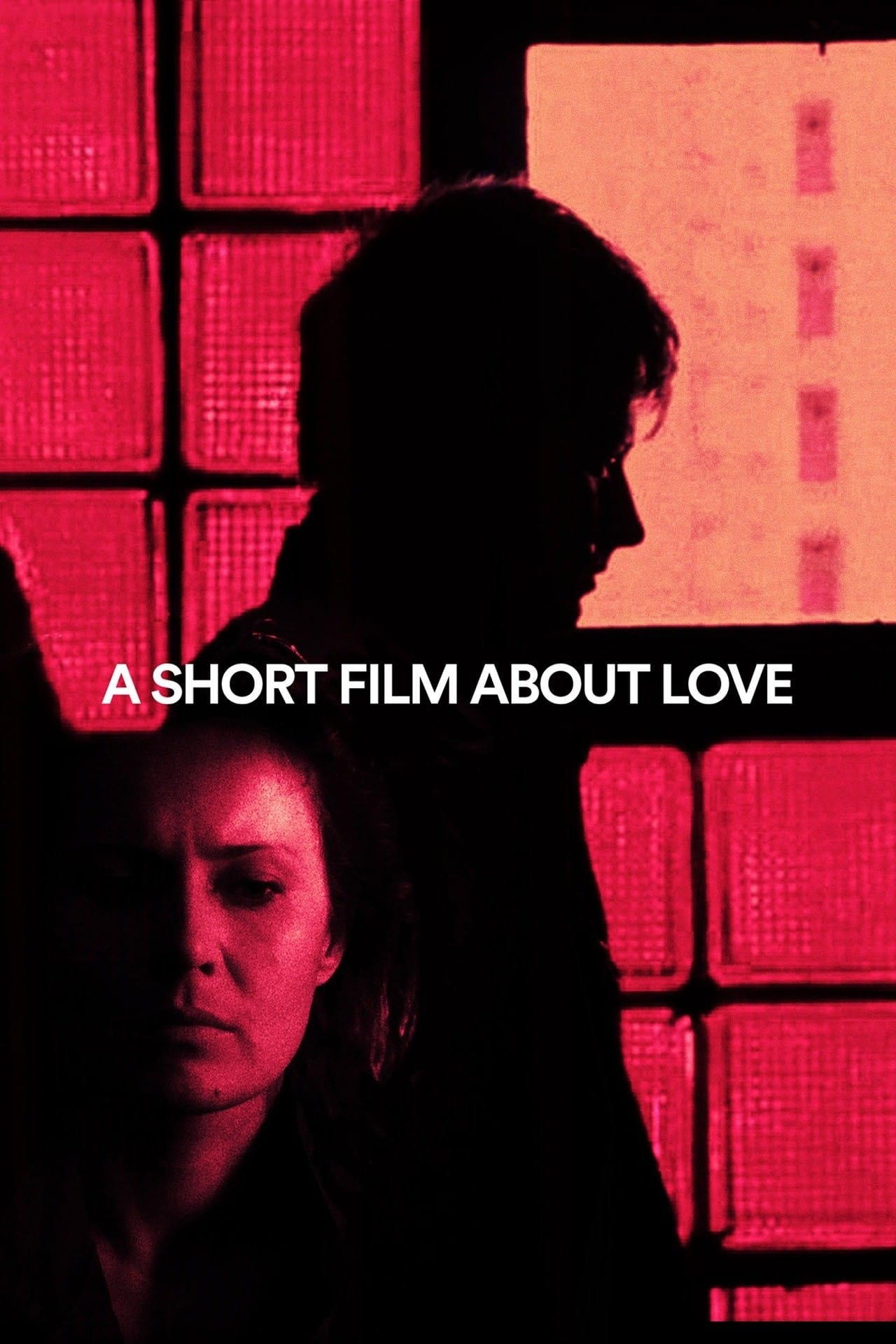
On November 4, the Green Bay Film Society will screen A Short Film About Love at 7pm at the Neville Public Museum in downtown Green Bay. Admission is free and open to the public.
Over the past five years, four states have passed laws mandating the display of the Ten Commandments in public schools. The commandments, believed to be spoke by God to the Israelites over 3000 years ago, serve as the moral foundation of both Judaism and Christianity. Posting them serves as a reminder but not a reflection on their meaning in modern times. So what relevance do they have for our society today?
This was exactly the question Polish director Krzysztof Kieślowski (1941-1996) posed in 1989. Kieślowski and co-screenwriter Krzysztof Piesiewicz jokingly thought initially that it was a terrible idea, but, as he recounted in a 1990 interview with the British film journal Sight and Sound:
“Maybe there was something tangible in the air. We were living in difficult times and everything in Poland was in a colossal mess. No one really knew what was right and wrong any more or why we even carried on living. We thought maybe it was worthwhile going back to the simplest, most basic, most elementary principles of how to lead one‘s life.”
Kieślowski and Piesiewicz decided to create a 10-part television series that explored how these moral edicts could be understood in communist Poland whose government promoted state atheism. They decided to avoid overt religiosity as well as political parables, choosing instead to focus on ordinary people, all of whom lived in the same apartment block in Warsaw. In Dekalog One, for instance, a physics professor teaches his son to rely on reason and logic and encourages him to solve mathematical as well as daily problems rationally. One day, they decide to use their computer and mathematical models to determine if it is safe to ice skate on a local pond. Trusting in their calculations and scientific analysis, the young boy goes skating with friends, falls through the ice and tragically dies. The story reenvisions the First Commandment, in which God commands us to have no other Gods before him, by questioning whether we have put too much faith in science and technology. Kieślowski insisted that there was not a 1-1 correspondence between each episode and a particular commandment, but instead viewed them as a guiding principle for the series to understand the dilemmas of modern Polish society. Due to financial and contractual obligations, Kieslowski later expanded two of the episodes into feature length films: A Short Film About Killing (a condemnation of the death penalty) and A Short Film about Love (an exploration of love and passion).
The series propelled Kieślowski to critical acclaim in Europe, and his later project, Trois couleurs, a trilogy exploring the themes of the French Revolution, cemented his reputation of one of the great auteur filmmakers.